Cacophony
Project-first swarm management for coding agents, wherever they run.
Harry Askham · a.skh.am/stack/deck
Many agents, one repo, one person
- Parallel agents in one folder overwrite each other.
- A session ends and its context is gone.
- Fifty pull requests a day conflict with each other.
- I want to steer from anywhere: terminal, browser, phone, watch, voice.
“Too coupled.”
My first two attempts (djent, then io-mcp) worked, but each did too much in one place. The next pass had three rules:
Lineage: djent (parallel agents + beads) → io-mcp (voice, ring, self-management) → caco
Five layers
Surfaces are clients of the daemon API, never independent authorities. Durable state is append-only or git-backed, so you can inspect it without the UI.
caco does a lot
103 top-level commands. Every one has --help --json, and the same tree is served as MCP tools, so agents drive caco the way I do.
Local clients talk to the local daemon
- One auth pattern and one place to infer the caller (node:project:agent).
- The daemon decides: serve locally, proxy to a same-node service, or forward to the authoritative peer.
- Remote peers never touch another node's loopback port.
A task list agents can share
- IDs like
bd-1a2b3c, priorities P0–P4, dependencies caco bd claimhands the next ready task to exactly one agent- one node owns the SQLite store; everyone else proxies through their daemon
- commits and PRs cite bead IDs, so history links back to intent
Claim → clone → land
- Identity
node:project:id; branchagent/<node>/<project>/<id>. - Each agent gets a dedicated clone that shares object storage with a daemon-maintained canonical checkout.
- States: pending → starting → running → waiting / blocked → completed / failed.
Agents are config, not processes
# projects.yaml
cacophony:
  agent_defaults:
    profile: [caco-surfaces]
  agents:
    persistent:
      config-dev-0: {{ set "nodes" (list "node-a")
                       values.config-dev }}

# a role is imports + profiles
dev:        { imports: [agents/dev.yaml] }
pr-monitor: { imports: [agents/pr-monitor.yaml] }
life-dev:   { imports: [agents/pi-paratenic-dev.yaml],
              profile: [global-bead-scope],
              all_projects: true }
Persistent agents are declared per node; the daemon keeps them running. Workers are spawned from the same recursive defaults.
A project is a policy
cacophony-config:
  remote: "ssh://git@github.com/harryaskham/cacophony-config.git"
  always_update: true            # live config source stays fresh
  integration:
    backend: pull_request
    pr_base: origin/main
    gate:
      test_command:  nix run .#yaml-check
      check_command: caco --config config.yaml config validate
  friend_projects: [cacophony]   # agents here can see and reach that repo
  agents:
    persistent:
      config-dev-0: {{ set "nodes" (list "node-a") values.config-dev }}
Remote, landing policy, CI gate, friend projects, actions, releases and its standing agents, all in one reviewable file.
Profiles compose
---
name: worker
description: Implement the next ready bead.
hooks:
  on_start:
    - type: command
      command: caco agent status set "starting"
  post_tool_use:
    - matcher: "Bash|Edit|Write"
      hooks:
        - type: command
          command: caco msg speak "Continuing work"
reintegration:
  mode: direct
---
Implement the assigned bead, validate it, and report completion.
A role stacks profiles: default_profile + mixins such as caco-surfaces, cacophony-bead-scope, global-bead-scope, project-controller. Runtime-agnostic: Pi, Claude or Codex. Landing modes: direct, pr_auto_merge, pr_review, artifact_only.
Typed agent graphs
flow: caco.canary.default-agent
imports: { t: ./types.jtd.yaml }
in:  { request: t.Request }
out: { result: { type: t.Result, checkpoint: true } }
nodes:
  respond:
    agent: { mode: ephemeral }
    instructions: >-
      Return request.text unchanged …
    in:  { request: t.Request }
    out: { result: t.Result }
edges:
  - { from: in.request,     to: respond.request }
  - { from: respond.result, to: out.result }
- typed ports (JTD schemas), checked at compile time
caco flow simulate: deterministic, records effects instead of doing themcaco flow inputanswers a node that suspended for a human- 61 registered flows: std.feature.delivery · pr.queue.drain · multi.surface.review · android.review · macos.review · fleet.error-triage …
- cron and feed events can start runs
Batch or wake
message_delivery:
  default_mode: batch
  batch_flush_interval_secs: 120
  allow_runtime_opt_out: true
heartbeat:
  interval_secs: 900
  jitter_secs: 900
- routine mesh chatter coalesces into one summary wake per recipient, at most every 120 s
- direct, lifecycle, system and
--wakemessages stay immediate - without batching it's senders × recipients model turns
msg send · broadcast · speak · reply · thread · inbox
Asleep until needed
- pi-on-demand / pico-on-demand: the workspace and session persist, and no process runs between approved wakes
- pi-daemon: logical sessions in one process; a wake is an idempotent turn, not a spawn
- heartbeats wake chosen agents on a jittered 15-minute cadence
- dormant isn't failed: the UI shows "wake & send" instead of a dead terminal
Agents ask, anything answers
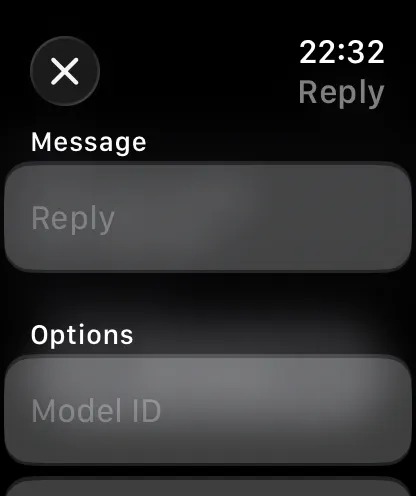
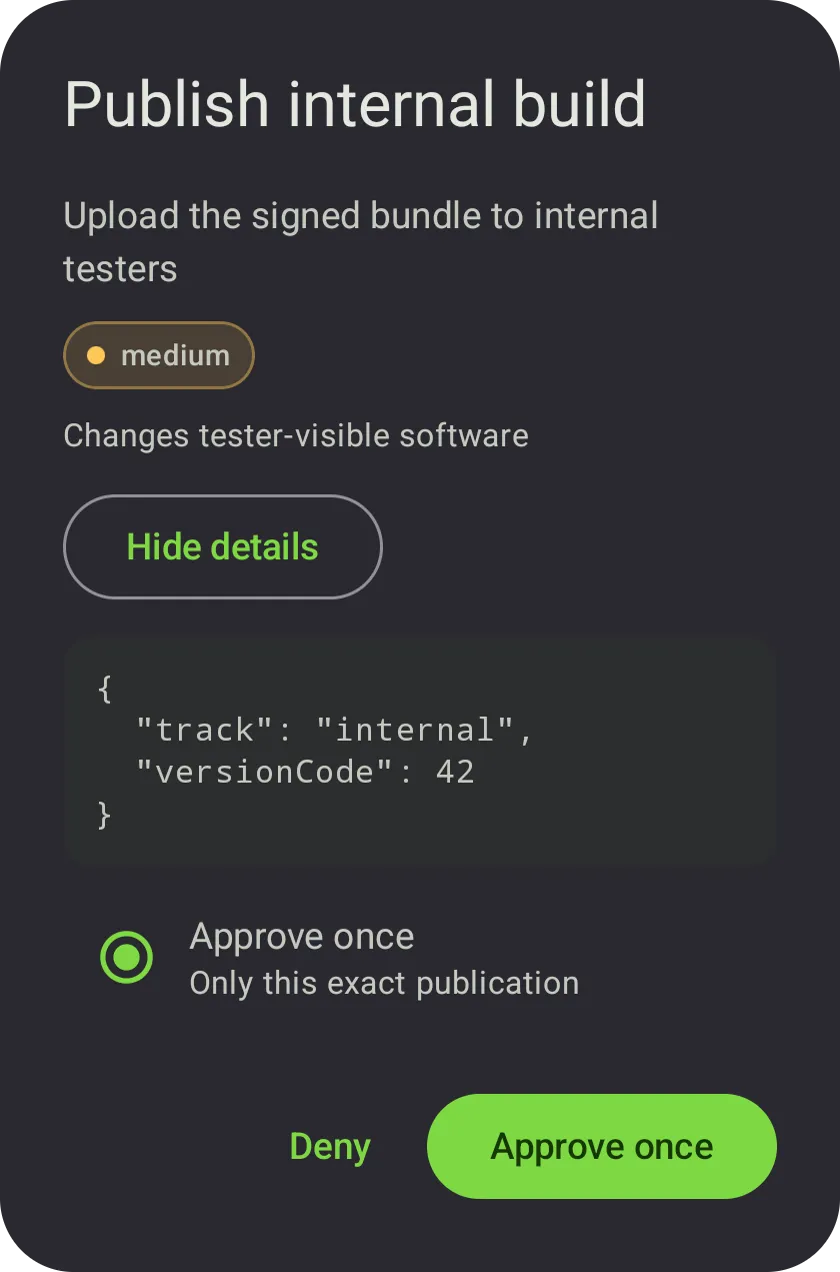
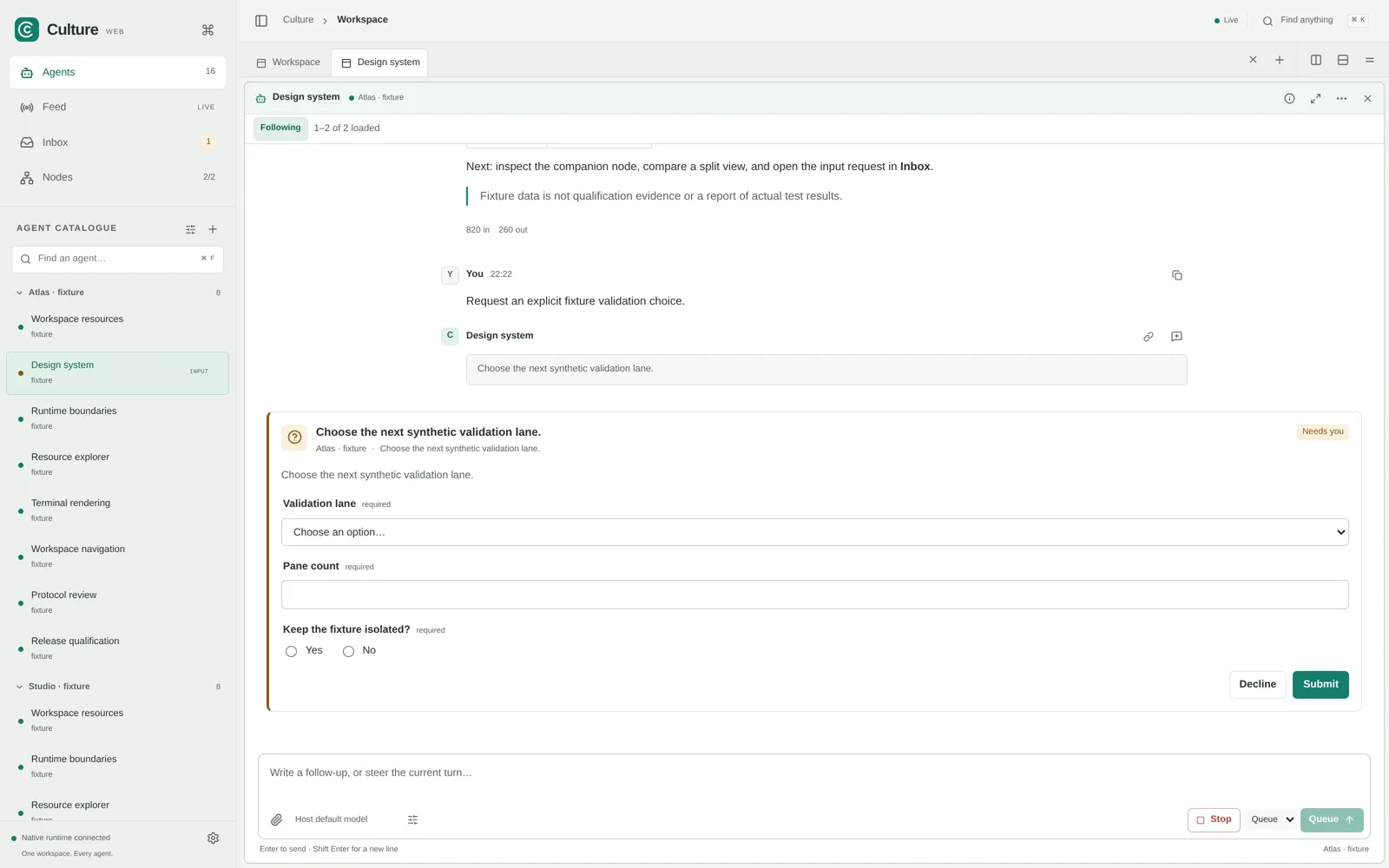
- AHP input-needed: an agent pauses on a question and any client can settle it
caco choicesandcaco decision: an async queue of operator decisions- spoken choices in Pi: pick by keys, ring, voice or a number
- tool approvals from the phone or the watch
Chains, not a pile
- a caravan is labelled PR chain: each PR targets the one before it
- only the head has auto-merge; the head's number is the caravan ID
- deterministic compatibility and CI checks run mechanically
- judgement calls come back as typed decision points for an agent
Every tick ends in a verdict
$ cara sync --json
{ "scheduler_status": {
    "disposition": "waiting_ci",
    "root": "#5181", "tail": "#5186",
    "missing_required_runs": [],
    "head_of_line": {
      "pr": "#5183", "position": 3,
      "block": "conflict",
      "remedies": ["repair", "reshape", "evict"] } } }
Idempotent: run it again and it either converges or returns the same one decision. --rerun-failed retries only this generation's infrastructure failures. Illustrative output shape.
Agents don't need to be subprocesses
One live session, every client
- Paratenic: one AHP host per node, on the official Rust crates
- a Pi extension exposes the already-running session; no second process
- Culture: one Rust core for TUI, web (WASM), Android, Wear, iOS, macOS
- Cacophony delivers over AHP, and never sends one message by two routes
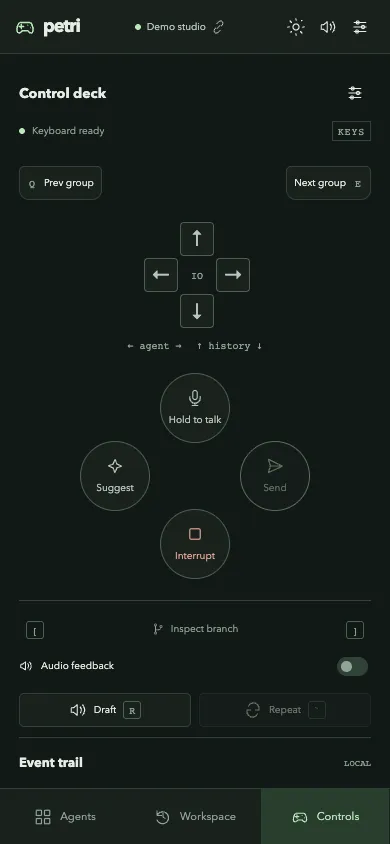
- Petri (Paratenic labs, formerly Agent IO): gamepad, keyboard and voice control of the whole roster
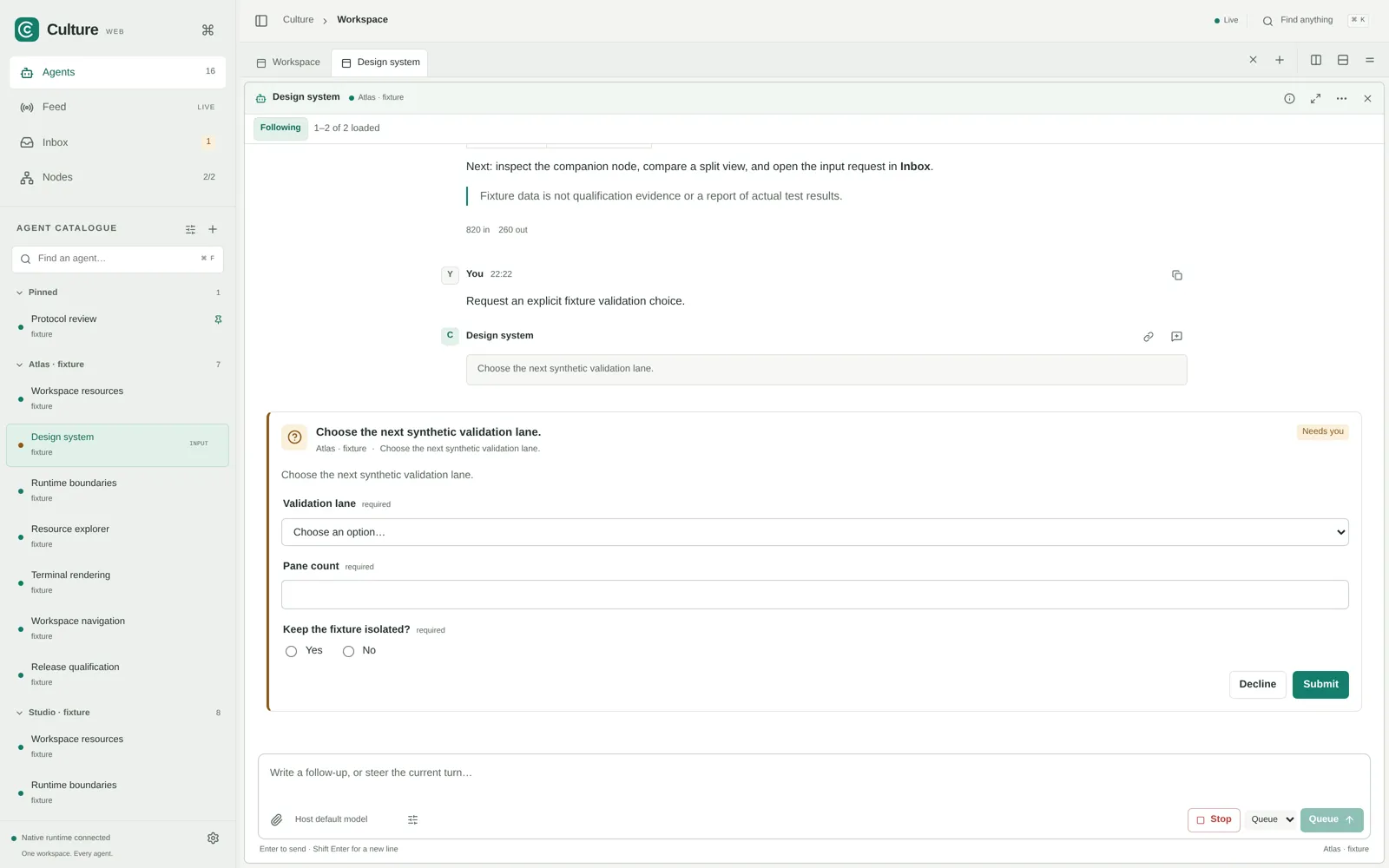
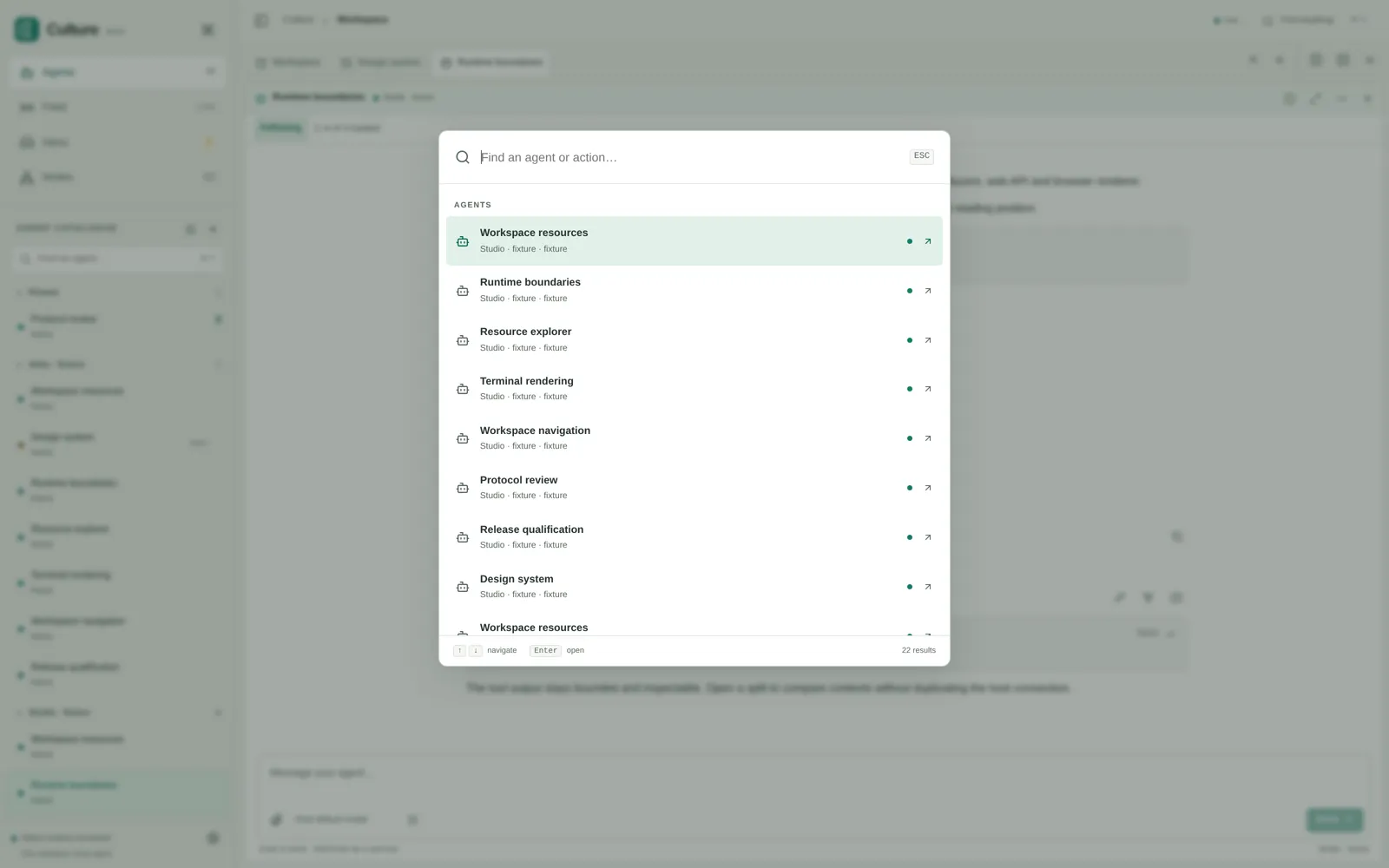
Speech in, speech out
# stt.yaml
stt:
  model: mai-transcribe-2
  vad: { engine: silero, threshold: 0.9,
         min_silence_duration_ms: 2000 }
  dictation: { chunk_secs: 10, overlap_secs: 1 }
  smart_append: { enabled: true }
  rewrite: { enabled: true, model: smart }
# tts.yaml
profiles:
  harry:         [defaults, models/harry, lang_rotation_gb]
  harry-express: [defaults, models/harry, express_as_harry]
- voice activity detection, chunked dictation, then a rewrite pass
- TTS in a cloned voice, with express-as styles and per-action voices
- the daemon plays through the phone's PulseAudio server, into my earbuds
- Pebble ring → transcribe → Jev picks an action → spoken receipt
The same agents, everywhere
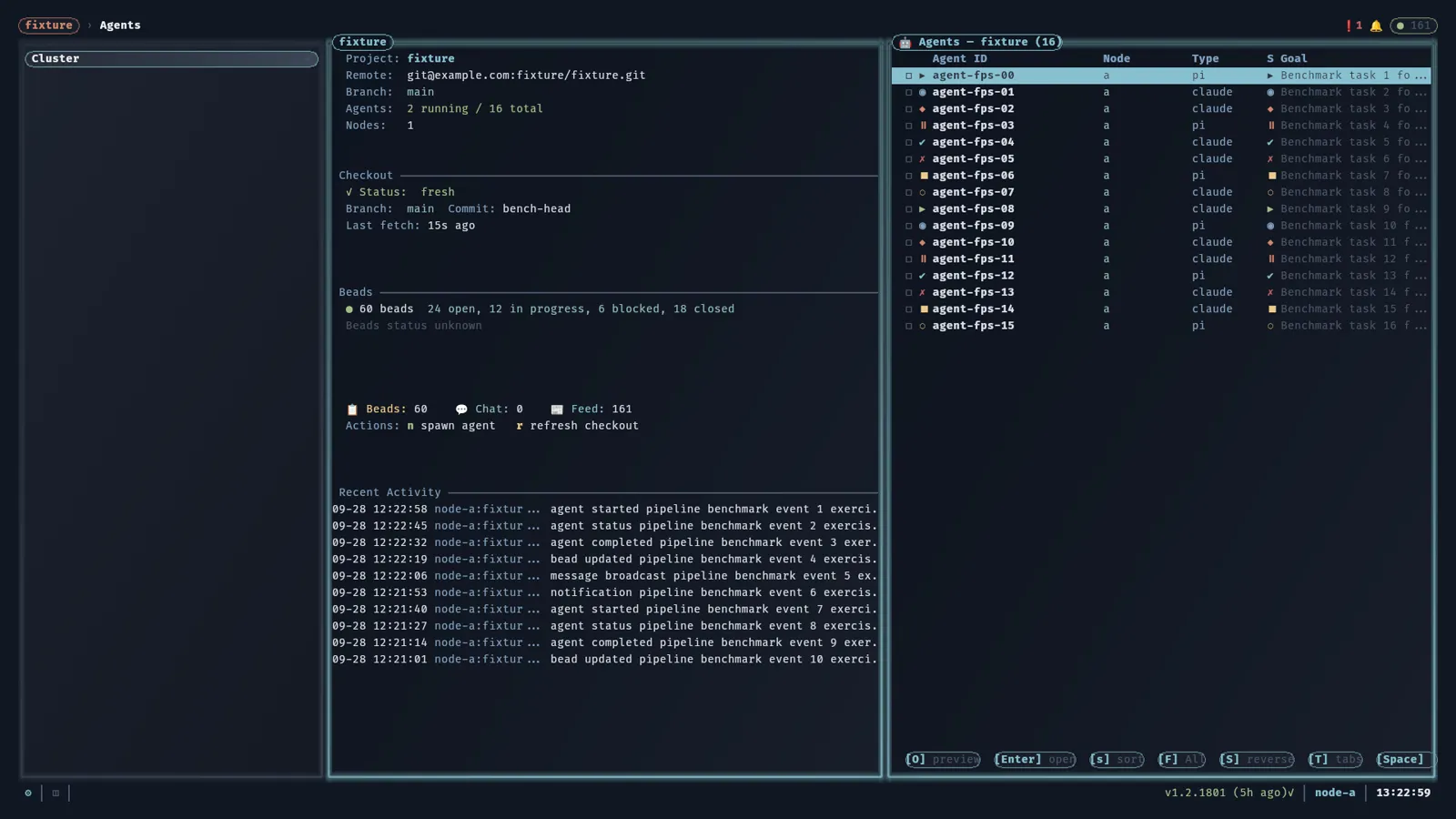
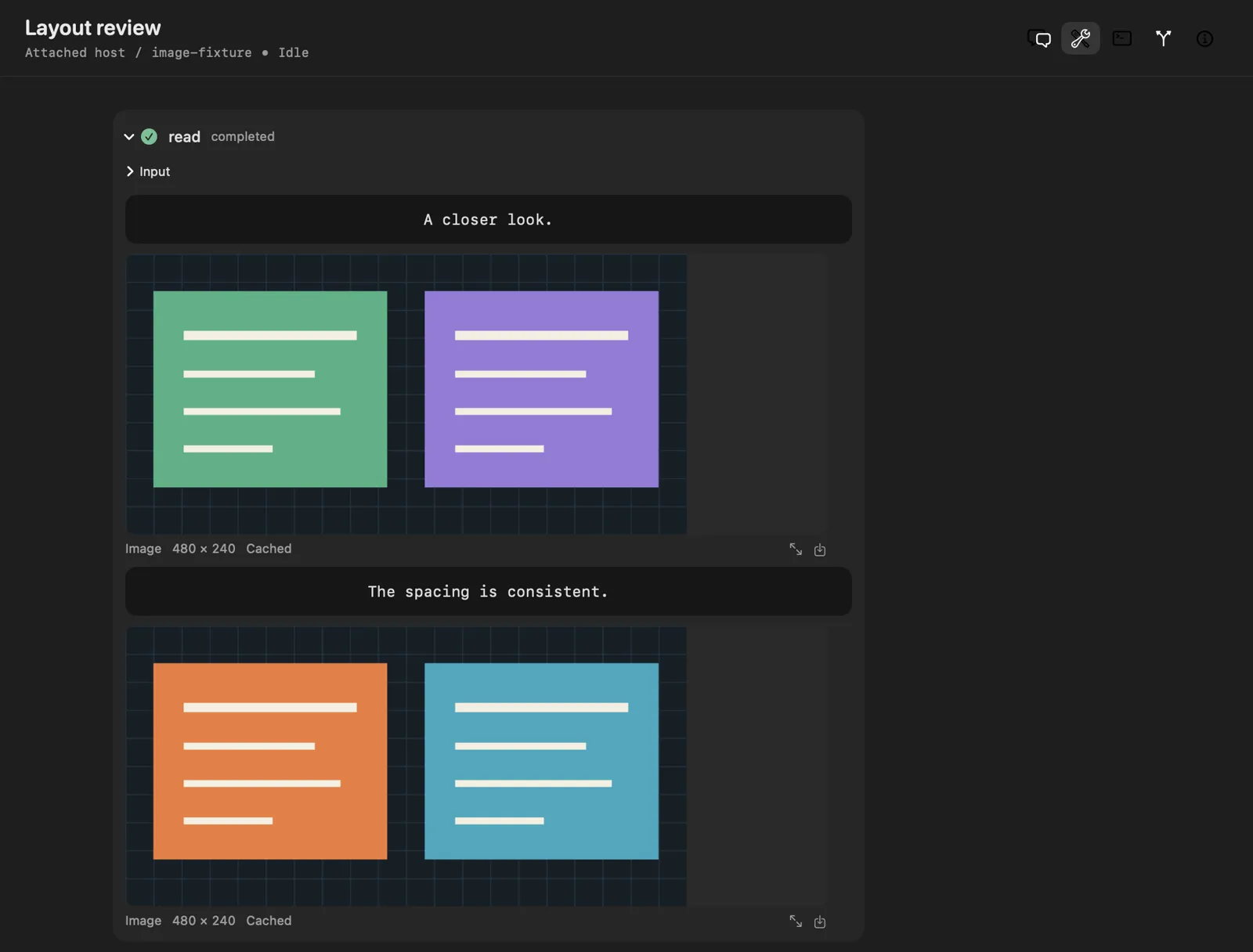
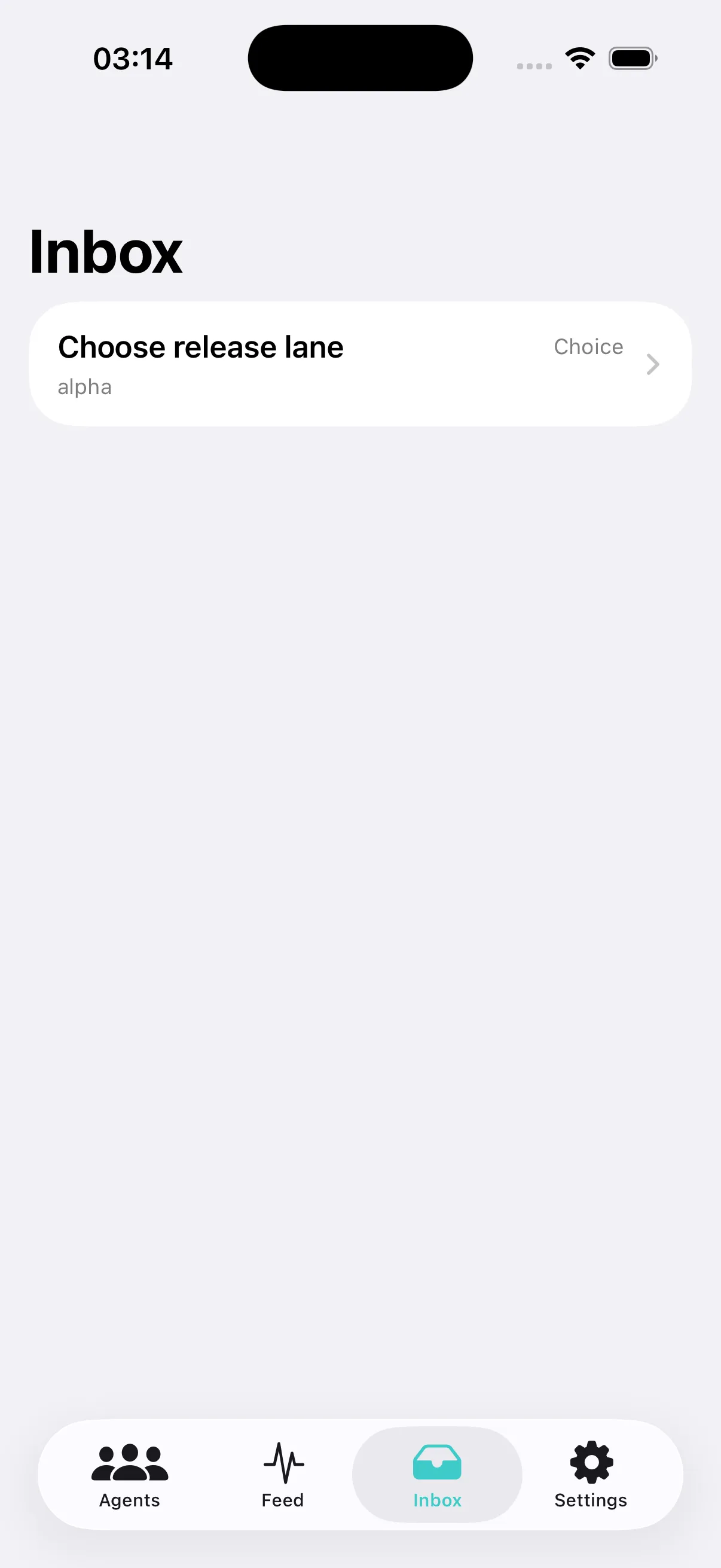
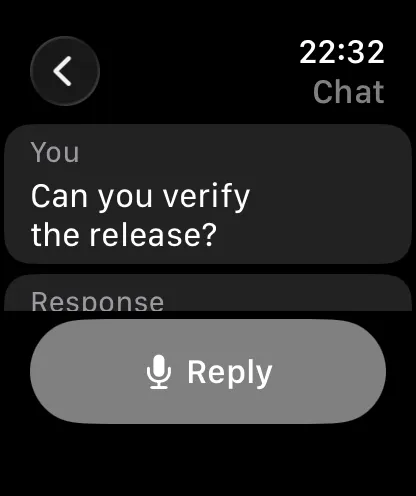
TUI, web, Android, Wear, iPhone, iPad, Apple Watch and native macOS. Fresh Cacophony macOS captures to come.
The terminal is the canvas
- 1,913 kitty image uploads in 20 s with ultra-v2 animation on
- 6.6 MB of images to the terminal; median frame 2.8 ms
- 238 fps of render headroom at a paced 30
- layout → raster → encode → kitty upload → place, with caching, dedupe and shared memory when the terminal allows it
The real TUI on a synthetic fixture (16 agents, a 60-bead board), captured in kitty. Numbers are that run's own.
One renderer, many materials
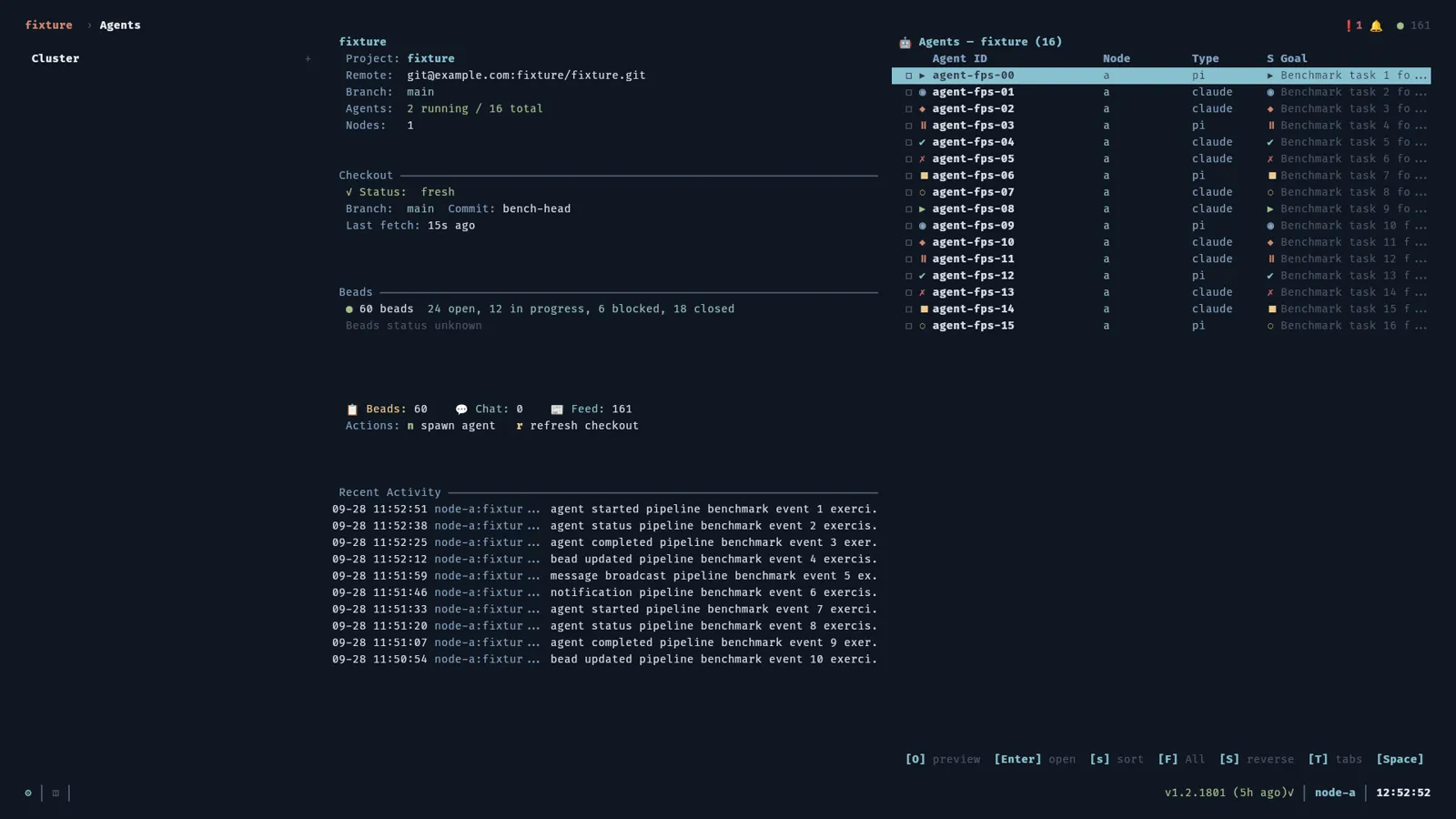
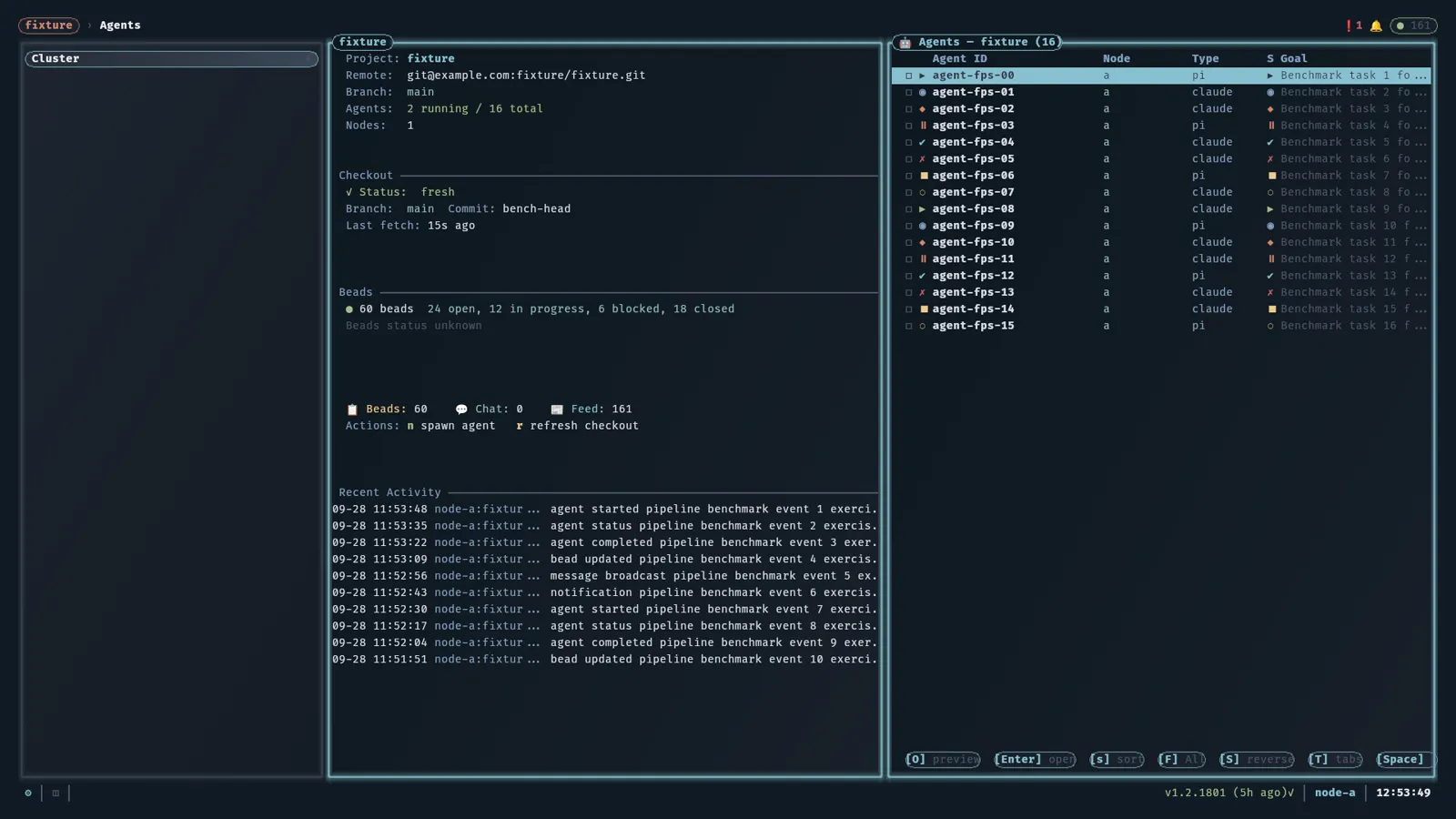
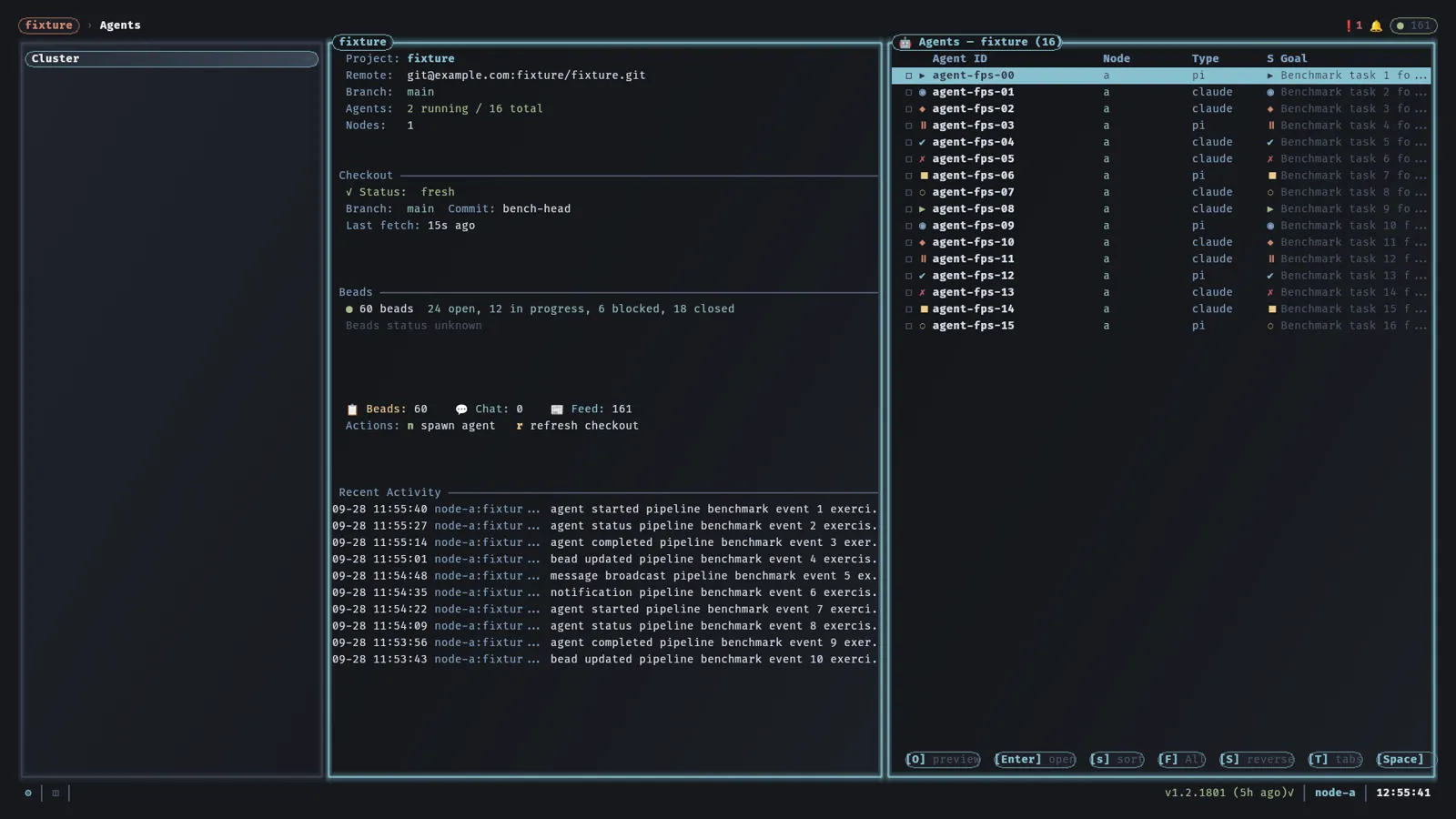
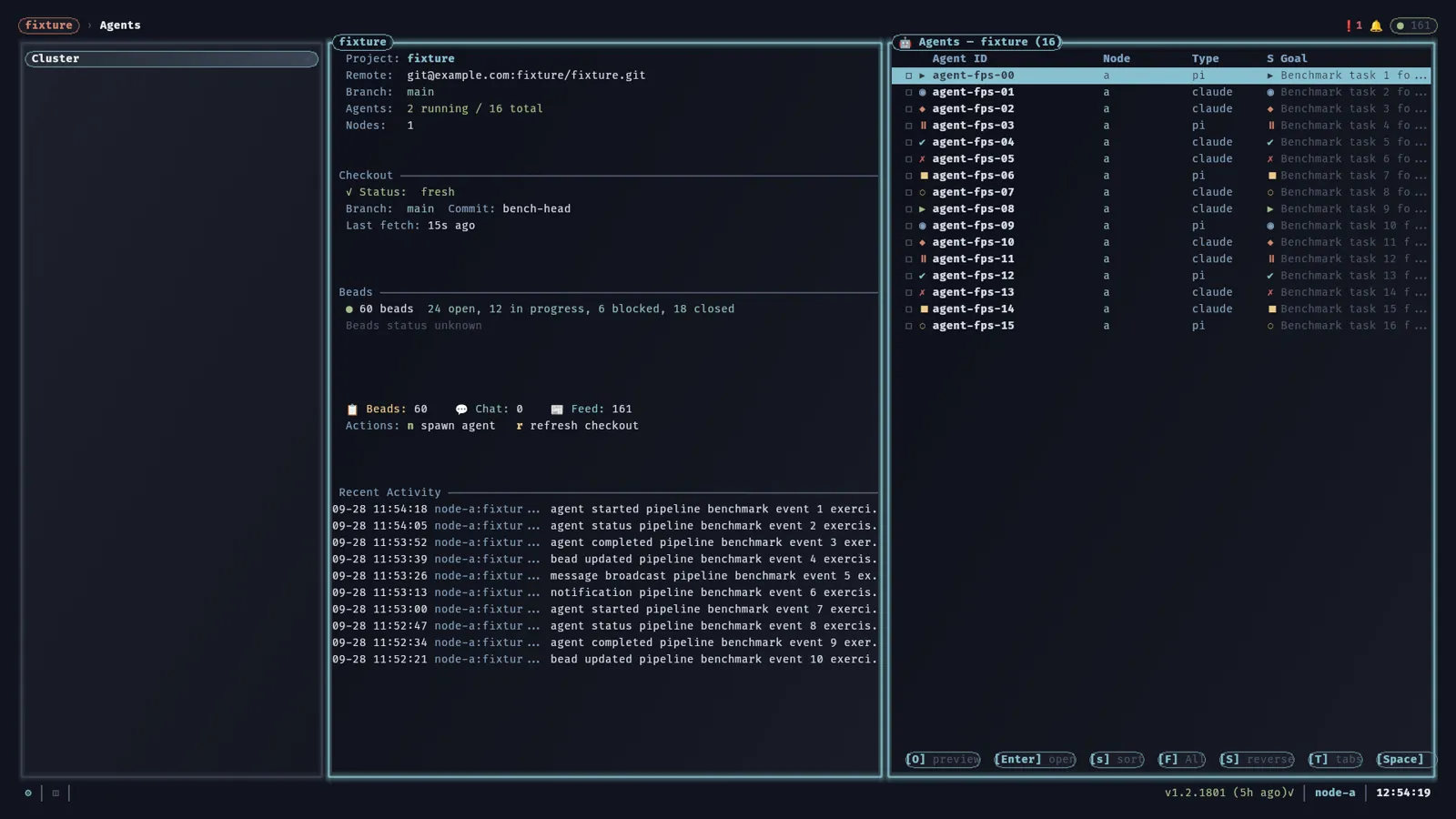
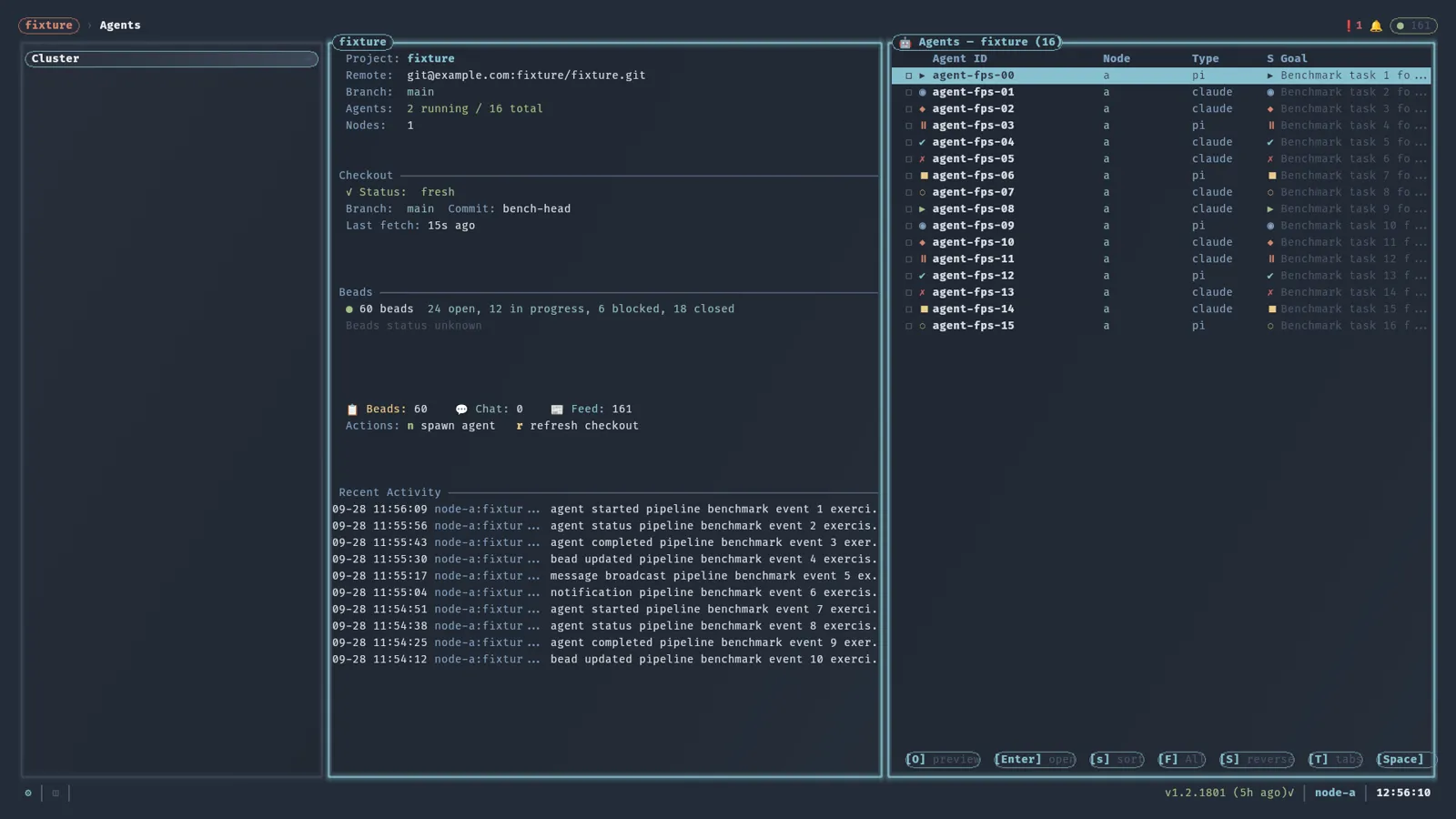
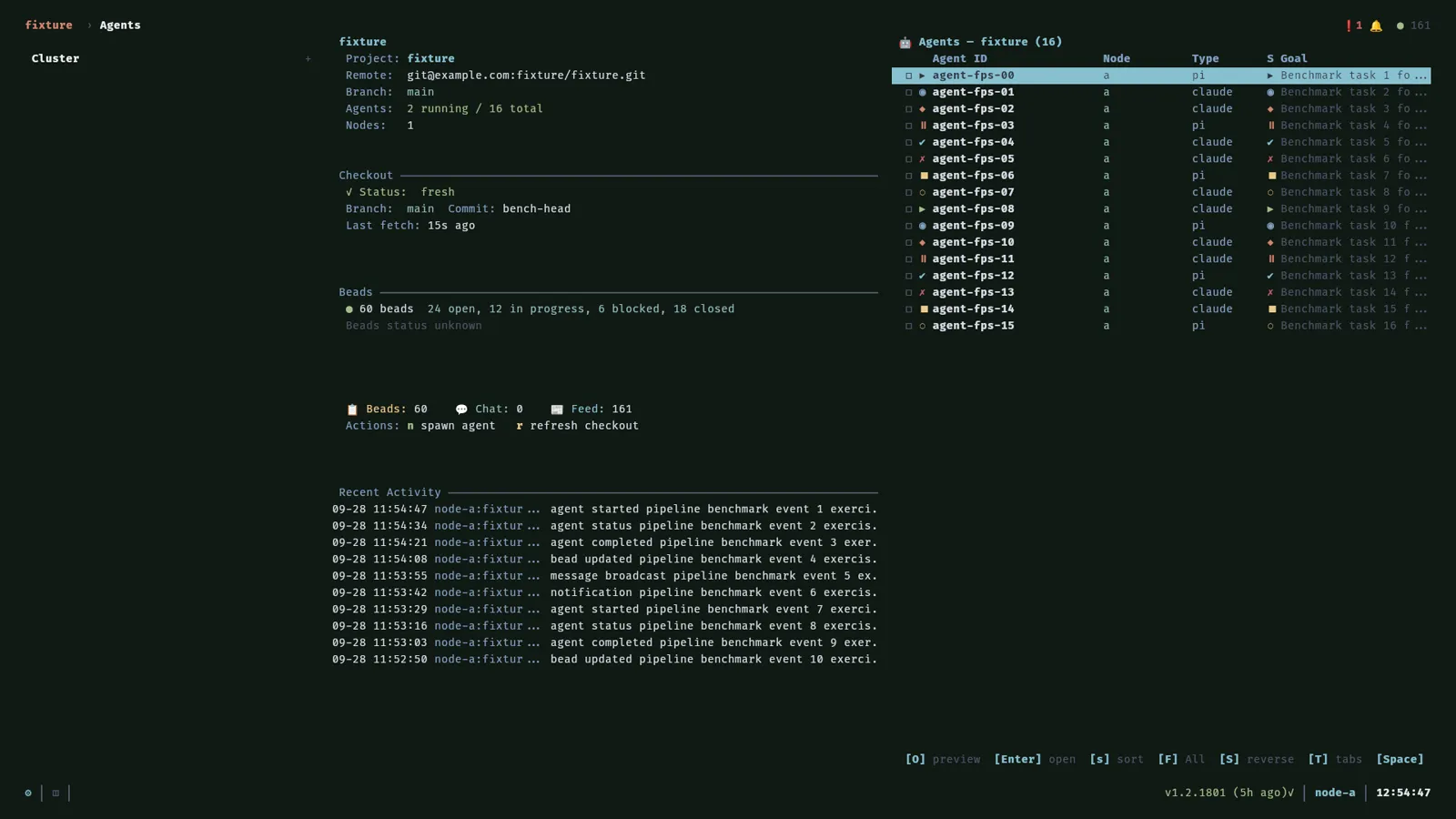
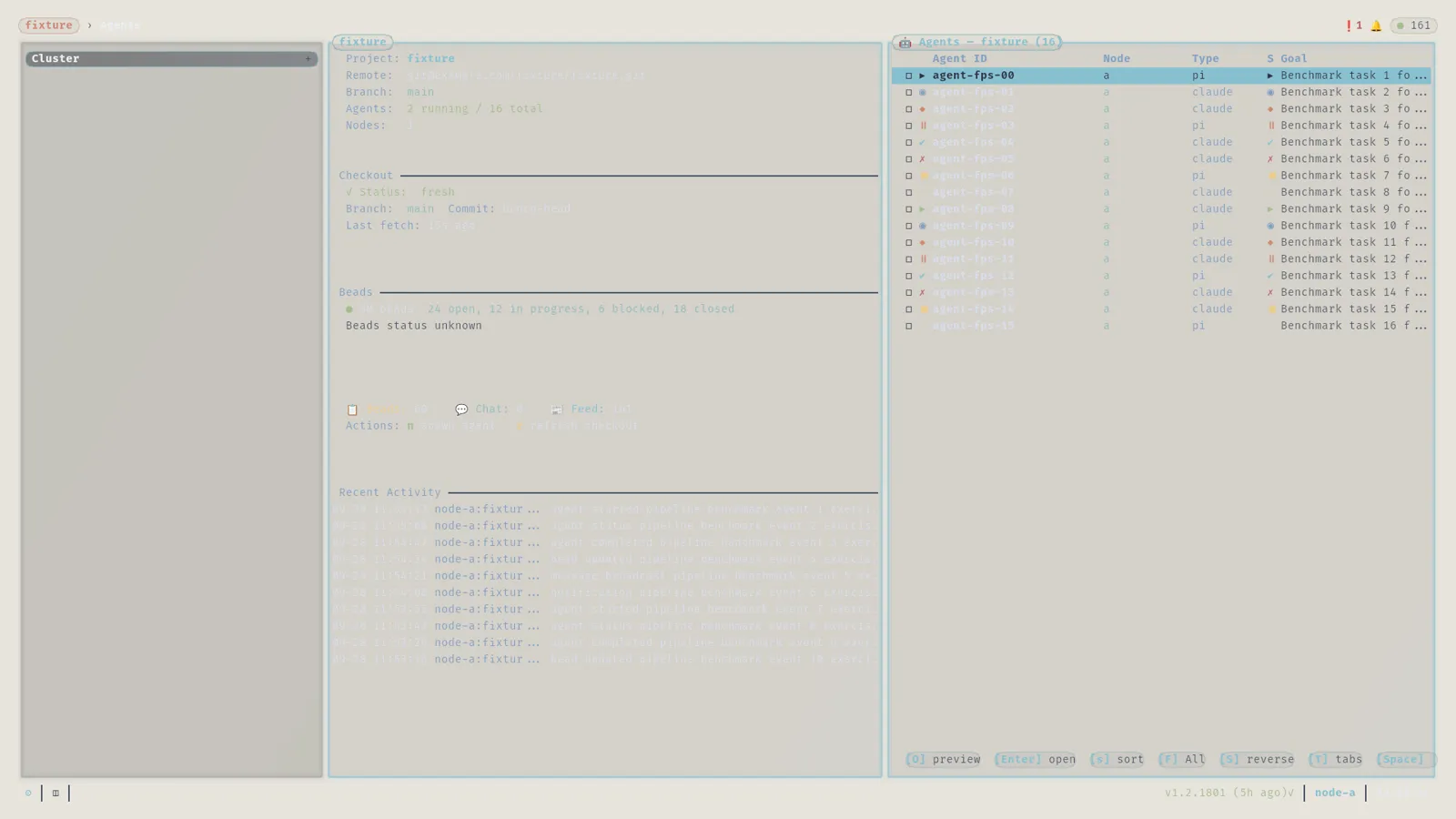
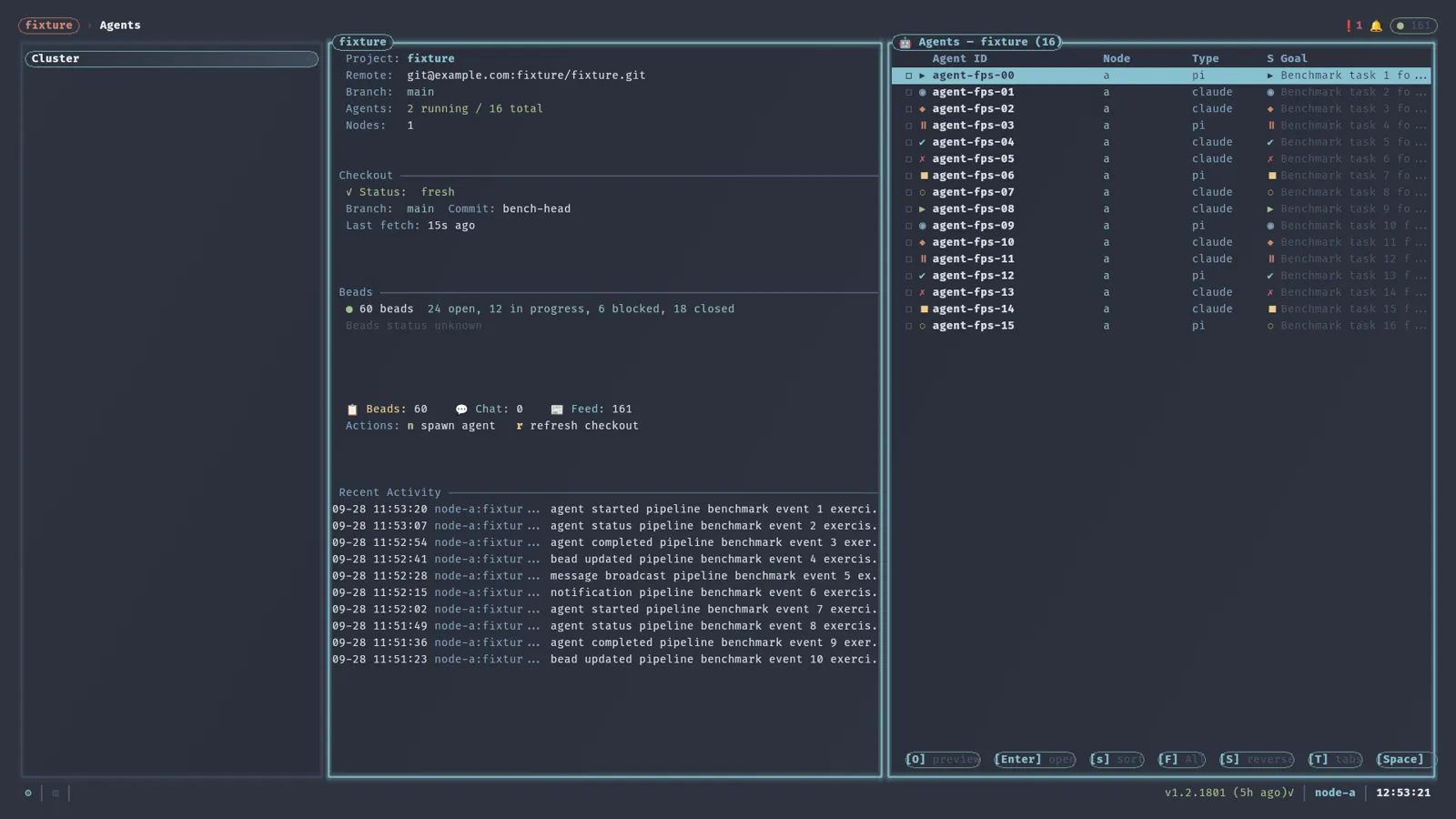
ultra-v2 · glass · chrome · neon · nord · crt · e-ink · the original ultra: the same screen, one renderer, presets in config.
One phone speaks for every node
# the phone (nix-on-droid)
pulseserver = {
  enable = true;
  virtualSinks = [ "cacophony" ];  # :4713
};
# every NixOS node
services.pipewire.pulse.tcp.enable = true;
# the Mac, the watch app, Pebble
PULSE_SERVER = "<the phone>:4713";
- every agent on every machine speaks through the phone, into my earbuds
- the phone's mic feeds dictation back to whichever node asked
- the realtime tools can switch server, sink and source at runtime
The ground was already Nix
- ~30 machines in one flake: NixOS, nix-darwin, nix-on-droid, NixOS-WSL
cltv switchrolls any machine forward- Android apps are Nix apps; a tag ships to Play
- every CLI has
--help --jsonand is also an MCP server
The whole stack
One voice note, top to bottom: ring → caco → beads → an agent → earbuds.
What it produced
What I'd tell you to copy
- Give every agent its own clone and branch.
- Keep one authority per piece of state; everything else proxies.
- Make every CLI readable by agents: JSON help, MCP from the same tree.
- Declare agents; don't start them. Let the daemon converge.
- Spend on the substrate early. Nix made scaling cheap.
Start small
pi install git:github.com/harryaskham/agent-utilsspeech, voice and choices for Pinix run github:harryaskham/tendril -- listlet an agent see your screengithub.com/harryaskham/mcp-clia CLI that's also an MCP toolgithub.com/harryaskham/caravana merge queue with an agent in it
Everything else: atlas · nine-month film · how I use computers
Questions?

a.skh.am/stack/atlas
every piece, with how and why · the whole stack on one tape · how I use computers